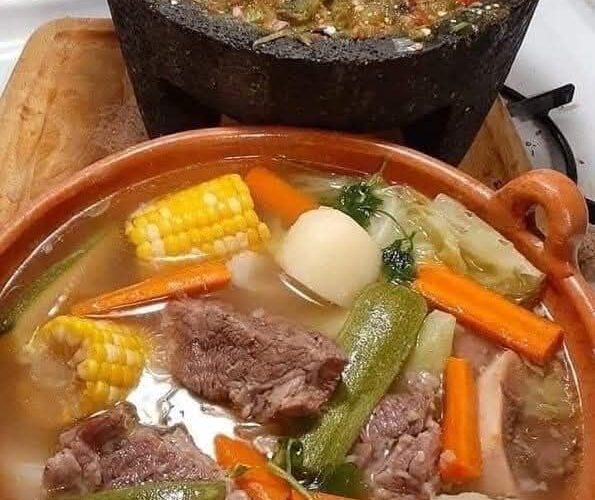
Caldo de res, or sopa de res, is a comforting, wholesome soup of tender meat and vegetables. It begins by simmering beef shank and bone, herbs, and garlic. Corn, potatoes, carrots, cabbage, and a handful of other vegetables are cooked in the seasoned soup. Each step builds flavor on flavor!
The best caldo de res recipe starts with the beef, of course. The beef shank is simmered bone-in so that the marrow can melt and flavor the broth — no bouillon will recreate that flavor!
A few herbs add a minty, pepper tinge. This rich broth seasons the vegetables while they cook, and it’s potatoes, corn, carrots, and cabbage that make this caldo de res recipe hearty and filling.
But the vegetables I use aren’t the only options for Mexican beef soup — use what’s seasonal or rolling around in your freezer!
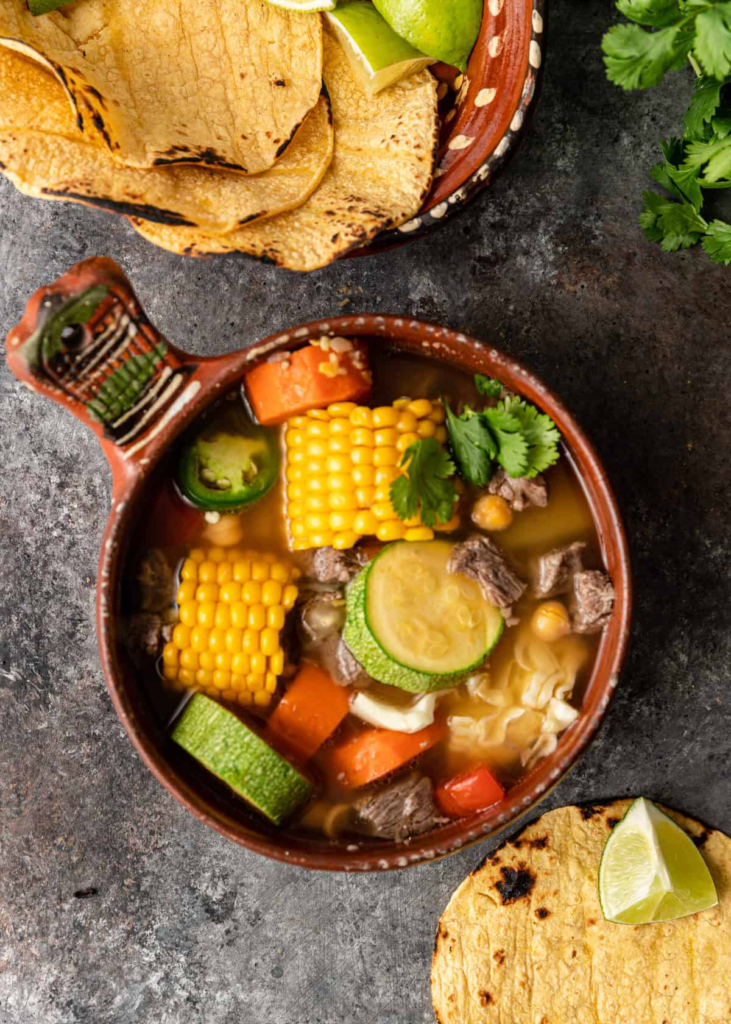
I serve this stew with soft corn tortillas, or bollio rolls if I have them. But there’s also nothing like dipping a spoonful of rice into that savory broth. Try cilantro lime rice, arroz verde, or arroz rojo.
Same goes for other delicious Mexican soups like albondigas or anything in a gravy. Carbs on the side are a must.
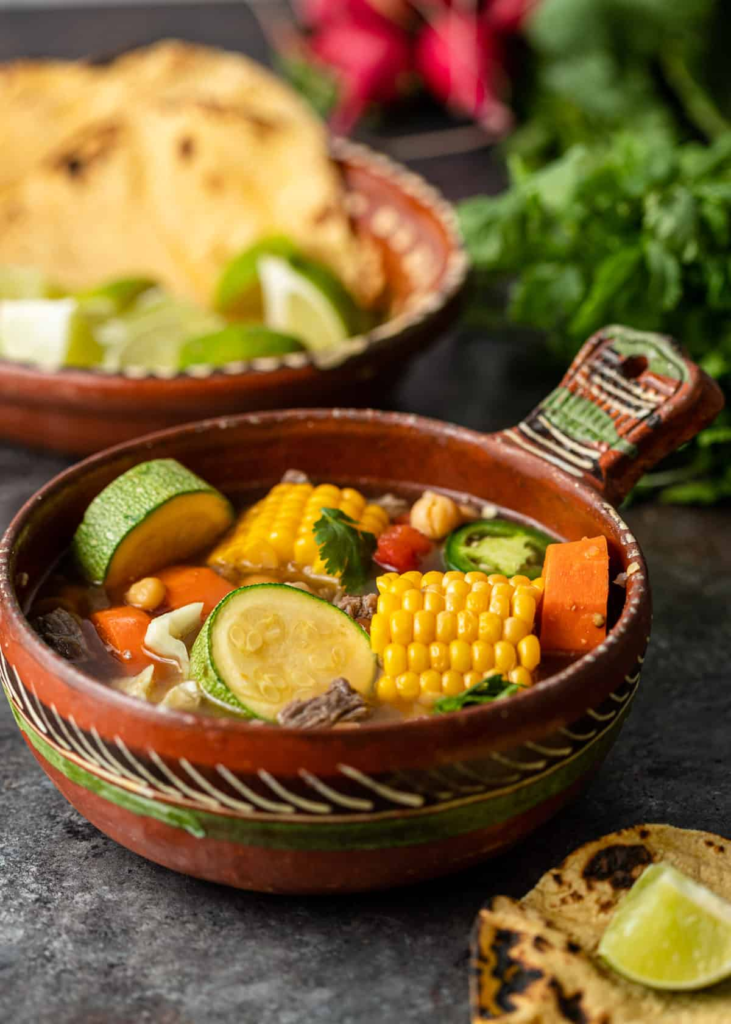
Ingredient Notes and Substitutions
(Be sure to check the recipe card for a full list of ingredients and quantities)
- Beef – While traditional Mexican beef soup uses just the meat from the bone-in beef shanks, I include cubed beef chuck in my caldo de res recipe to bulk it up a bit. You could also add beef short ribs or oxtail.
- Garlic, Bay Leaves, & Mint – These ingredients are simmered in the broth to add flavor and are discarded before serving. You won’t be eating them! The mint can be omitted if not to your taste. If you’d like to add another herb, try flat leaf parsley or basil.
- Vegetables
- Potatoes, Corn, & Carrots – These are the harder, denser vegetables in our caldo de res, so they’ll need more time to cook. Chop them into smaller pieces and let them simmer for longer than the softer vegetables below.
- Jalapeño – A chile will add a subtle spice — not at all overwhelming — to the soup. If heat is what you’re looking for, there are plenty more to choose from.
Cabbage, Zucchini, & Chickpeas – Cabbage, squash, and beans are all staples in Mexican cooking, so of course they’re in my Mexican beef soup! To make substitutions, choose from those same categories: kidney or black beans, yellow squash, lentils, etc.
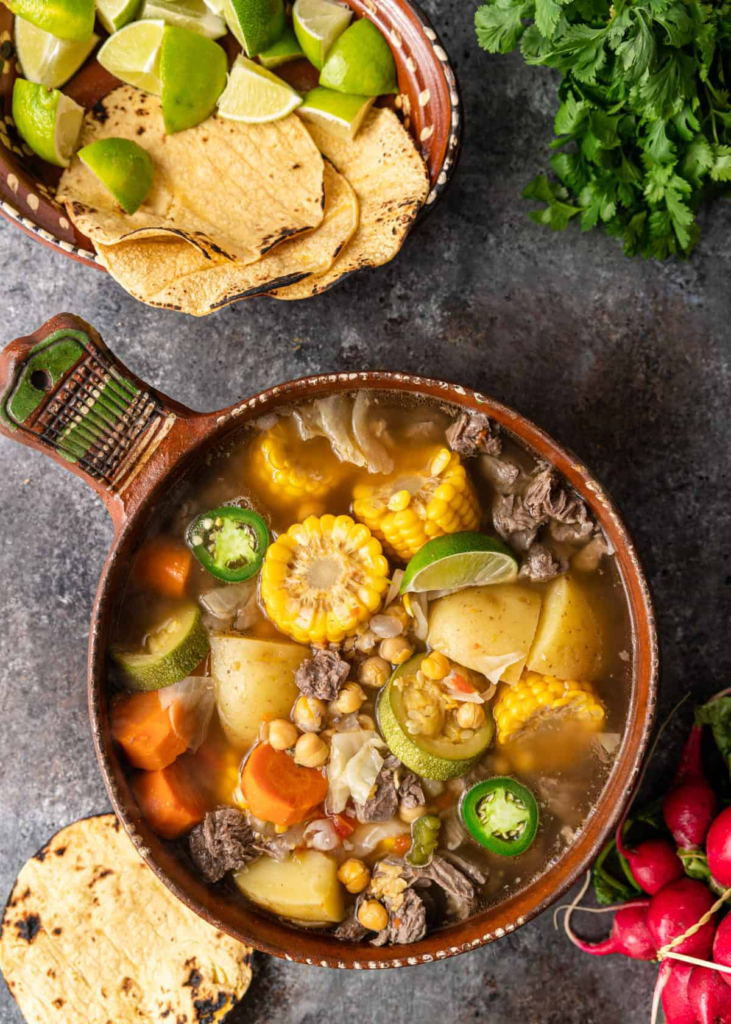
How to Make Caldo de Res
- Boil Beef & Bones. Pour 10 cups of water into a large Dutch oven. Add the beef shanks, chuck, garlic, bay leaves, and salt and bring to a boil. Reduce the heat, cover, and simmer for 90 minutes until the meat is tender.
- Remove Beef & Bones, Season. Skim off and discard any brow foam on the broth. Transfer the beef shanks and chuck to separate bowls. Remove the bay leaves and garlic and discard. Taste the broth. If a stronger beef flavor is desired, add a cube of bouillon.
- Cook Vegetables. Add the denser vegetables (potatoes, corn, and pepper) to the pot along with 2 more cups of water. Bring to a boil. Once boiling, add the cabbage, zucchini, chickpeas, and mint. Cover, reduce heat, and simmer for another 15 minutes until the vegetables are fork-tender.
- Combine All Ingredients. Meanwhile, remove the meat from the beef shank and add to the bowl with the chuck. Discard the bones. Cut the meat into bite-sized pieces and return to the pot. Simmer until warmed through.
- Serve. Remove the mint and season with salt and pepper. Stir the soup and serve in bowls topped with cilantro and lime juice.
Recommended Tools
- Large Dutch Oven – Or a soup pot — something large enough for all of these ingredients!
Storing and Reheating
Leftover caldo de res should be cooled completely before it’s stored in an airtight container. You can refrigerate it for up to 5 days, or freeze it for even longer. And it freezes quite well!
Reheat it back on the stovetop on medium-low heat until warmed through. If frozen, let it thaw overnight in the refrigerator before doing so.
Frequently Asked Questions
Can I make caldo de res in the slow cooker?
You can, and this can actually yield a tremendously flavorful caldo de res! The longer it cooks with the meat and bones, the more flavor it develops.
However, you need to be mindful of when you add certain ingredients. Wait until the broth’s flavor is just how you want it before adding the spices and vegetables, or else they may overcook. In fact, it’s best to wait until the last hour or so of cooking so they don’t become mushy.
How can I thicken the broth in my caldo de res?
The most effective way to thicken broth is to add a cornstarch slurry. Combine equal parts cold water and cornstarch and add it to the broth, 1 tablespoon at a time, until it reaches the consistency you desire.
Don’t add cornstarch right to the hot broth! It will clump up and not thicken the liquid at all.
Is caldo the same as pozole?
Caldo simply means “broth.” The versions of it you see (caldo de res, caldo de pollo) define
what that broth is made of (beef, chicken).
Pozole is more complicated. It contains some kind of meat, usually pork or beef but sometimes seafood, hominy, and chiles.
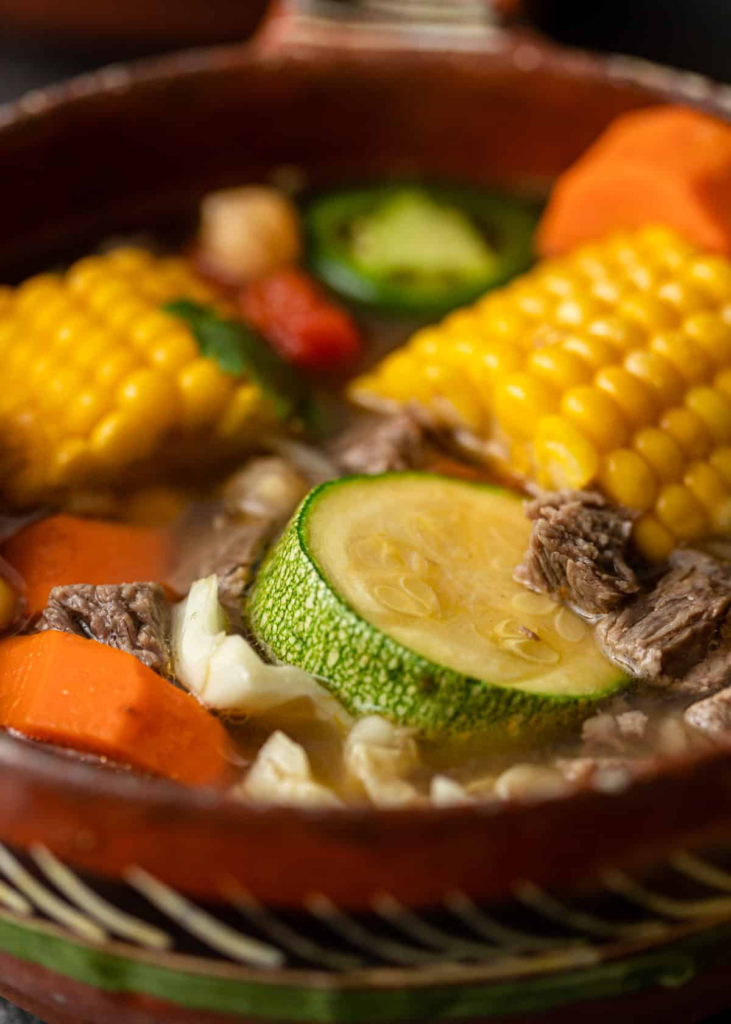
Caldo de Res (Vegetable Beef Soup)
Caldo de res, or Mexican beef soup, is more than just meat and broth. It’s a well-seasoned brew of vegetables, herbs, and two cuts of beef!
Servings:8
Prep:20 minutes
Total:1 hour hr 55 minutes
Ingredients
▢2 lbs beef shank bones or ox tails or short ribs instead of shanks- ▢1 lb beef chuck cubed (See Note 1)
- ▢3 cloves garlic smashed
- ▢2 bay leaves
- ▢1 tbsp kosher salt
- ▢2 yellow potatoes cut into eight pieces
- ▢2 ears corn shucked and cut into 2 inch pieces
- ▢4 carrots peeled, sliced into thick coins
- ▢1 large jalapeño sliced into rings
- ▢1/2 head cabbage cut into quarters
- ▢2 zucchini cut into thick coins
- ▢14 oz chickpeas drained
- ▢2 mint sprigs
Serving
- ▢1/2 cup cilantro chopped
- ▢2 limes quartered
Instructions
- In a large dutch oven or soup pot, add 10 cups water, beef shanks, beef chuck, garlic, bay leaves, and the salt. Bring to a boil, reduce heat to simmer, cover and cook for 90 minutes, or until the meat is tender. Skim off and discard any brown foam floating at the top.
- Remove the beef shank/bones and with a slotted spoon remove the pieces of cooked beef chuck, bay leaves and garlic cloves. Transfer cooked beef shank/bones to a bowl, and set aside to cool. Transfer cooked beef chuck pieces to a small bowl. Discard the bay leaves and garlic cloves. Taste, and add 1 beef bouillon cube to the pot if more beef flavor is desired.
- Add the potatoes, corn, carrots, jalapeno and 2 cups of water to the pot.
- Bring soup to a boil, then add the cabbage, zucchini, chickpeas and mint (See Note 2). Cover and turn heat to simmer and cook until vegetables are tender and cooked through, (check potatoes and carrots with fork), about 15 minutes.
- While the vegetables are cooking, pick over and remove any bits of meat from the bones and discard bones. Add meat to small bowl with beef chuck. Chop the meat into small bite size chunks and add to soup pot. Cook another 5 minutes to heat meat through.
- Remove mint sprigs and discard. Season with salt and pepper, stir everything thoroughly. Serve soup in large bowls, making sure that each bowl gets a little bit of everything. Serve and top each bowl with cilantro, freshly squeezed lime juice and warm tortillas, or bollio rolls (optional).
Notes
- Most traditional recipes call for just the meat off the beef shanks. I found this too little for the effort, so I add pieces of beef chuck. Beef short ribs work as well.
- I add the cabbage, zucchini, and chickpeas after everything has come to a boil so they do not over cook and become mushy.
Nutrition
Calories: 245kcal | Carbohydrates: 28g | Protein: 18g | Fat: 8g | Saturated Fat: 3g | Trans Fat: 1g | Cholesterol: 39mg | Sodium: 961mg | Potassium: 748mg | Fiber: 8g | Sugar: 9g | Vitamin A: 5419IU | Vitamin C: 41mg | Calcium: 85mg | Iron: 3mg
The information shown is an estimate provided by an online nutrition calculator. It should not be considered a substitute for a professional nutritionist’s advice.
